
We set foot in Botswana on Thursday afternoon after travelling for almost 16 hours. After clearing immigration and securing our passport stamps, we headed to the baggage area of Maun airport where we were very pleased to be reunited with our bags.
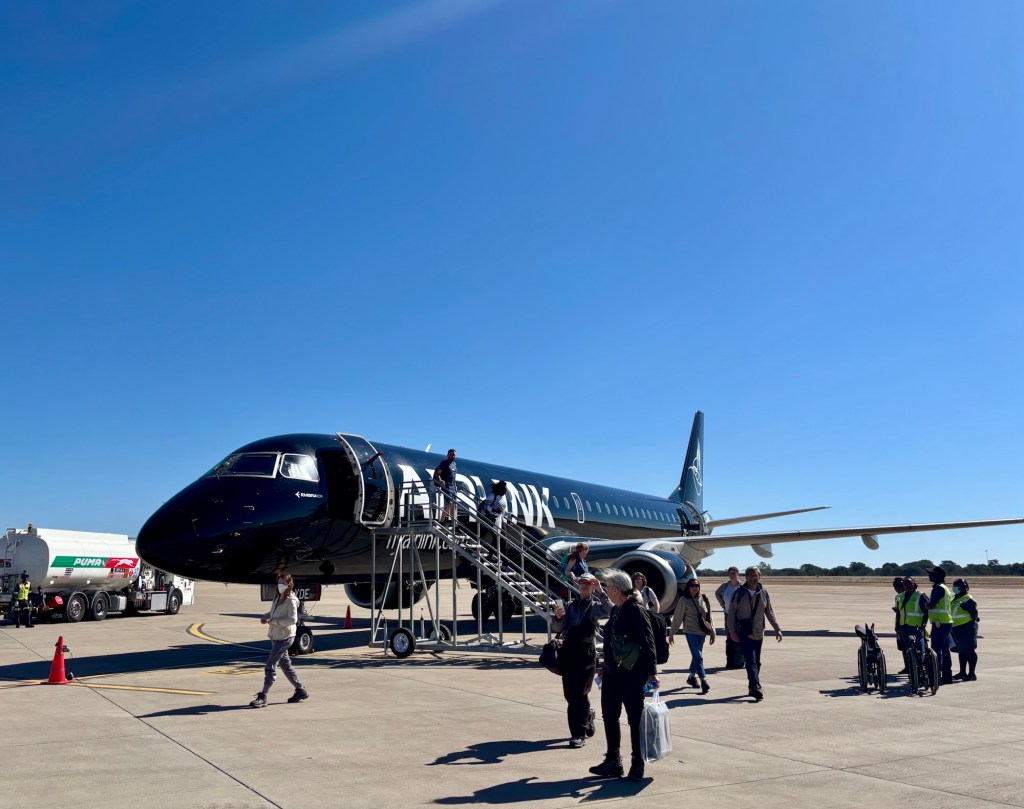
Our travel agent, Gareth (South African despite the name), had told us that we would be greeted by our helicopter pilot who would hold up a sign bearing our names. This was half right. We entered the arrivals room to see a tall, young man carrying the name board. He introduced himself as Joe.
“Are you our pilot?” asked Rhiannon.
He was not, he was our driver and would be taking us to camp by road rather than air. He led us to his jeep: closed top, open sides, able to seat nine. After giving us bottled water and advising us to wear glasses to protect our eyes from the dust, he took us on our way,
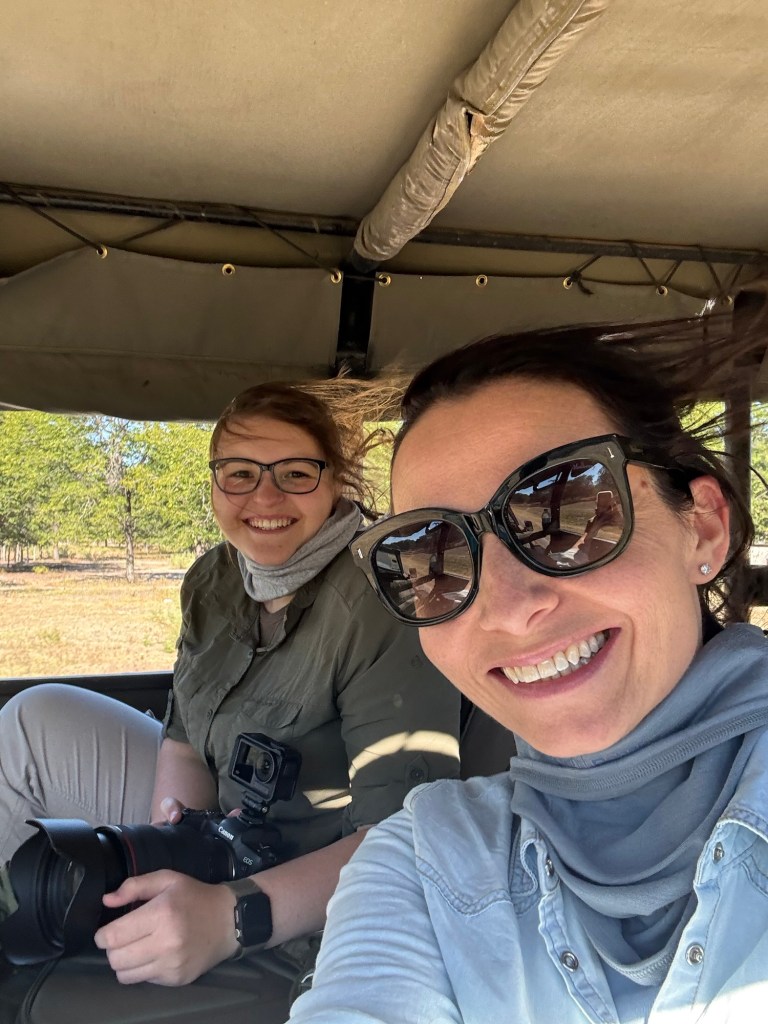
Any disappointment we might have felt about missing a scenic helicopter trip ebbed away as Joe drove us from Maun to Xaoo Safari Camp (pronounced ‘Chow’), the first of our three lodges. The ride took about two hours and gave us a glimpse of Botswana by road. They drive on the left like us unless they encounter a pothole in which case they drive on the right hand side or on the grass / dirt verges to avoid it. ‘Pothole’ really doesn’t it do justice to the holes: you could paddle in some of them. If it were rainy season that is.
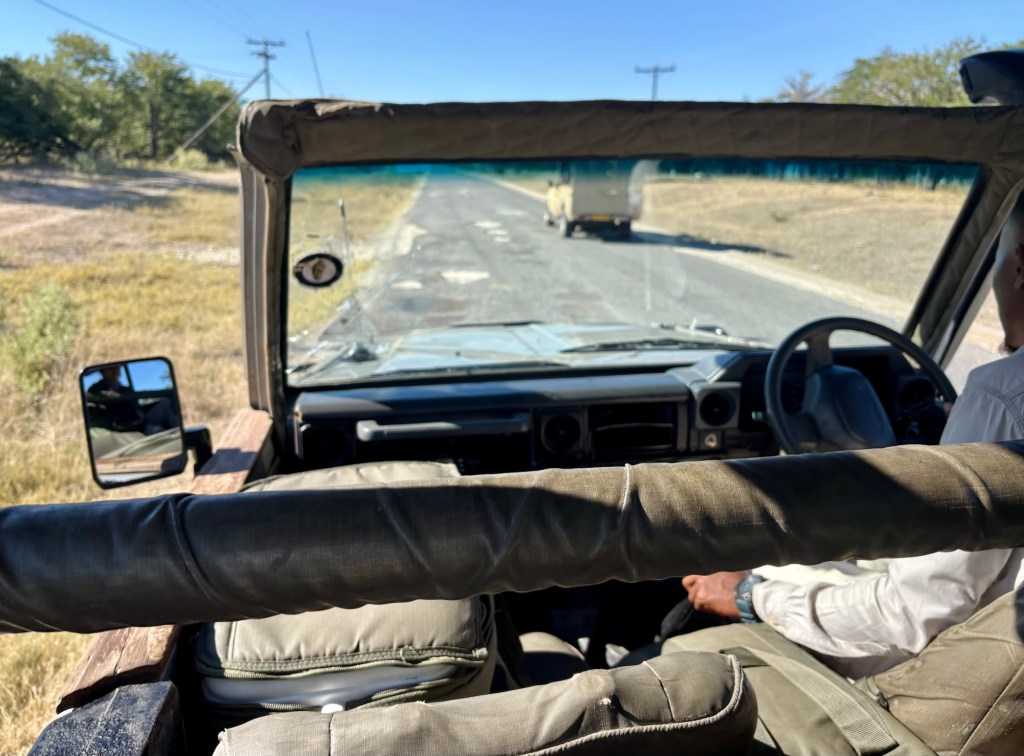
Lining the road close to Maun were car washes, shelters and food stalls. No McDonalds or Greggs here: just tables in tents with the servers ladling hot food into customers’ takeaway containers. As we moved further away from the village, we saw a large number of goats and cows roaming alongside and occasionally over the roads and not much traffic.
After about an hour, Joe stopped the truck and told us we were going “off road”. He cautioned us that it would be a bumpy ride, calling it “an African massage”! He also told us, slightly apologetically, that we would not be seeing animals on our journey to camp, just birds. If he thought we would be disheartened, he had not reckoned on Rhiannon who was so excited at the prospect of seeing all of the wonderful birdlife. Eyeing her camera, he told her to ask him to stop whenever she wished to take a photograph.
On our journey to the camp, Joe and Rhiannon spotted so many birds that I struggled to process all of the names and the beautiful colours. We saw starlings (a striking iridescent blue that puts our starlings to shame), crowned, long-toed and blacksmith plover (lapwing), pied kingfisher, red billed hornbill, jacana, black-winged stilt, African open bill and crimson breasted shrike.
“Ooh, what’s that?” I asked excitedly spotting a pale grey bird.
“A dove,” answered Rhiannon, smiling at me kindly.
Shortly afterwards, I spotted a magpie (though long-tailed and much prettier than ours) and I would, no doubt, have pointed out pigeons and seagulls had they been holidaying in Botswana at this time.
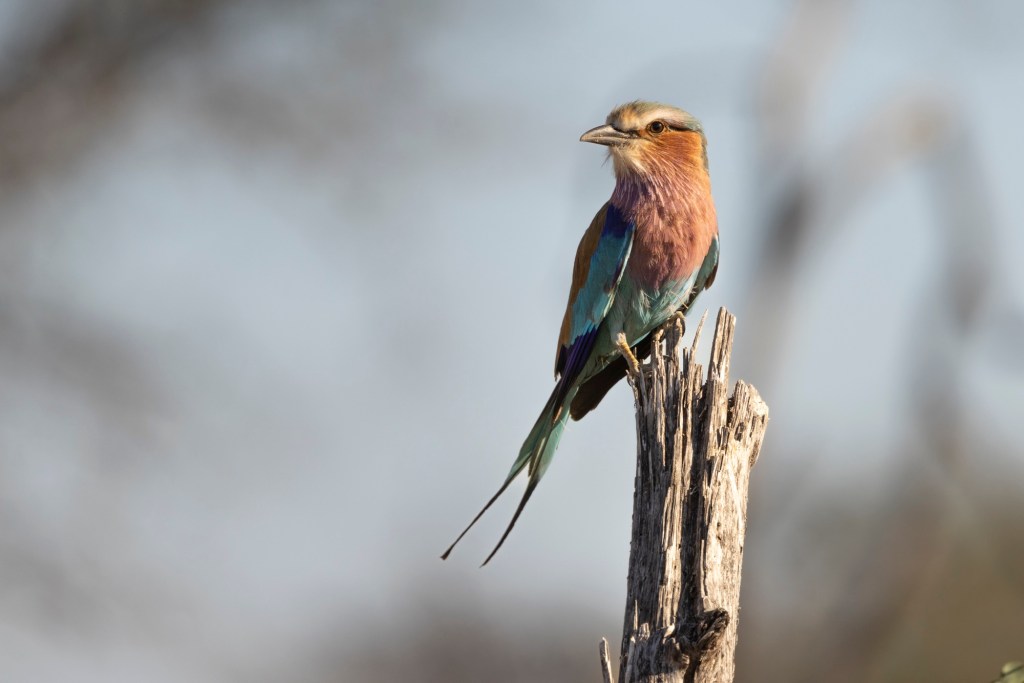
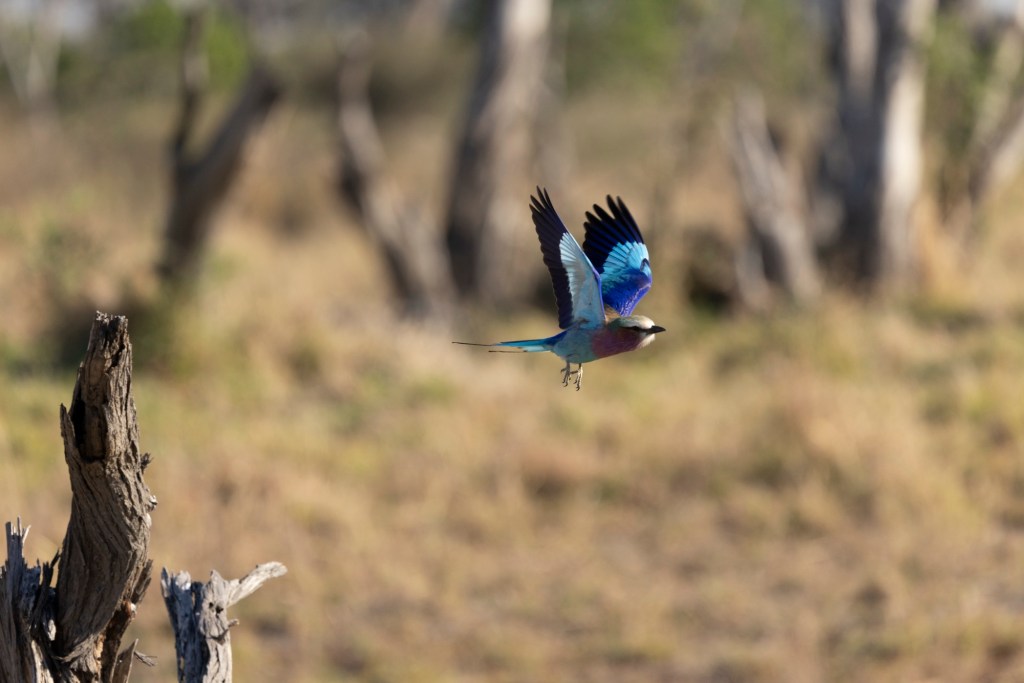
At one juncture, Rhiannon excitedly asked Joe to stop because she had seen an LBR.
I looked in the direction of her camera, wondering what on earth she was talking about. There, my eyes fell on the most beautiful, round little bird I had ever seen: multicoloured with electric-blue wings and a bright lilac midriff. How had I never heard of lilac breasted rollers?
Finally, after going far off the beaten track, we entered the camp. As Joe drove into the main area, we heard voices and were greeted by seven members of staff dancing and singing their welcome song. The bar manager “Ma” presented us with hot face cloths and welcome drinks comprising orange juice with grenadine: a sunrise in a glass.
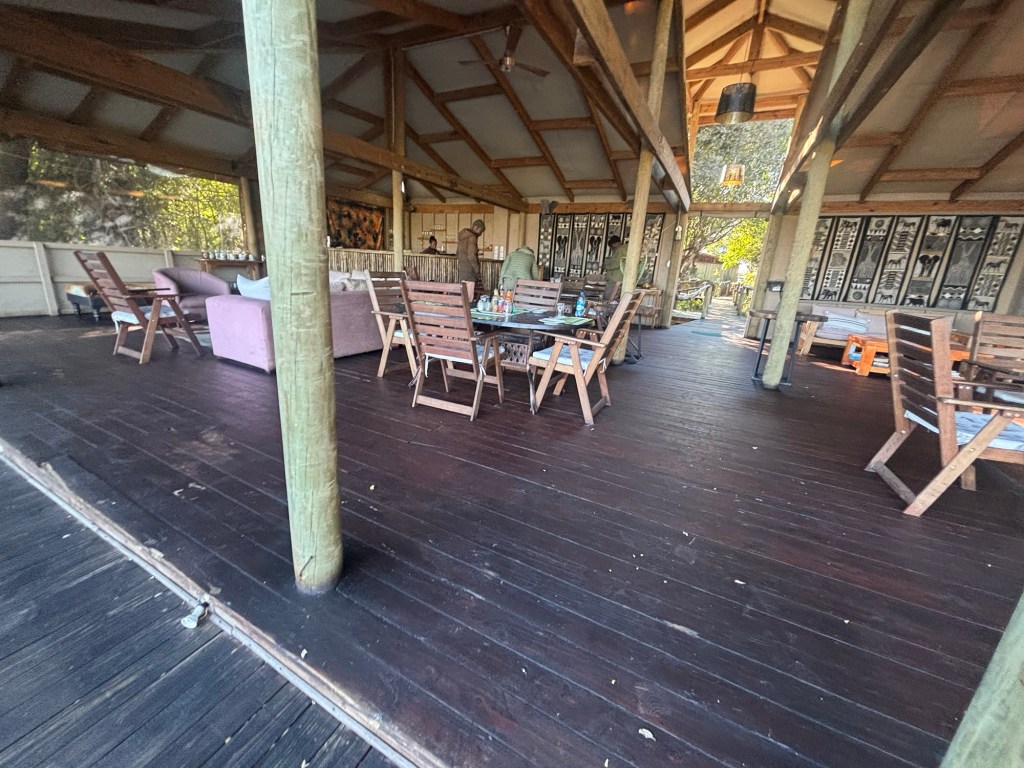
We were shown the main areas of camp: a large open dining area with a bar and sofas looking out over a pool, a fire pit and “the bush” beyond.
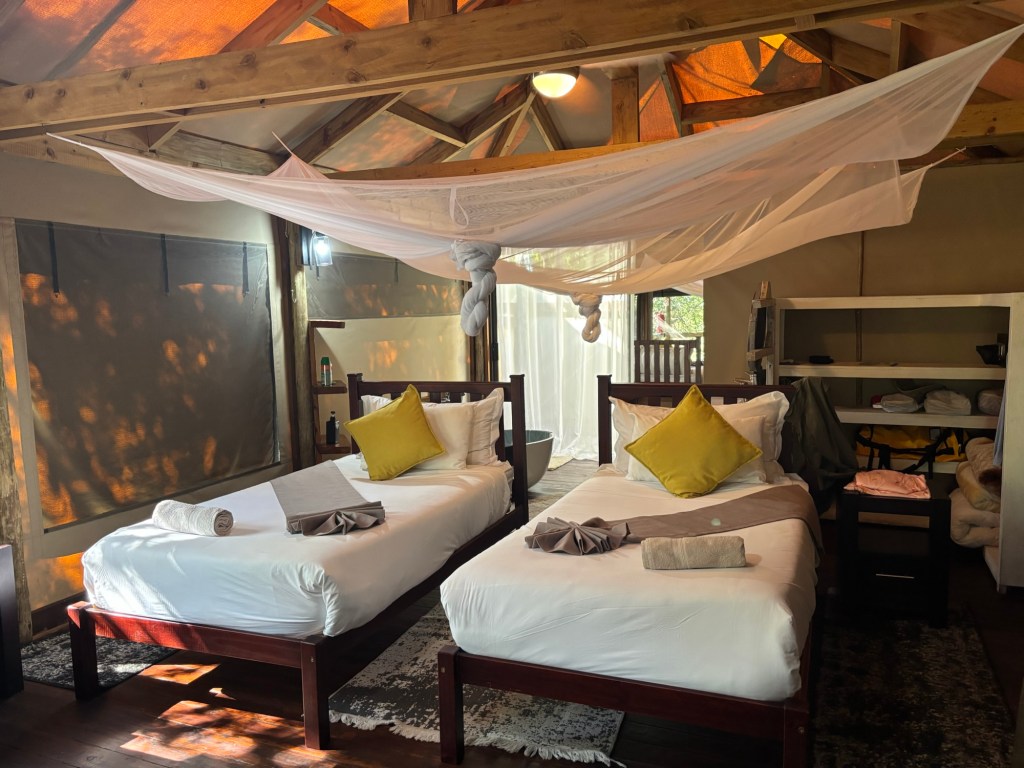
Our room was a stand-alone raised tent with one large bed (later converted into two), a ‘proper’ toilet and bath and an outdoor shower. The housekeeper told us to run the hot water tap for 15 minutes in order to get hot water although we later found it became extremely hot much sooner than this.

We only had a few minutes before going out on our first ‘activity’. Joe drove us a short distance to a mokoro station. A mokoro is a fibreglass canoe / punt used to travel the shallow water of the Okavango Delta. They were traditionally carved from wood but, these days, the locals save their local resources. The ‘driver’ stands at the back and ‘drives’ the mokoro using a long wooden pole.
Our mokoro driver was a man from the nearby village. He directed us to climb in one at a time, to keep our arms and legs inside at all times and not to move. “Not even if a spider lands in the boat,” he warned. I did not need to be told this. I remember all too well a gondola ride in Venice with Eun, Rich and my parents when I stupidly made to move seats mid-ride causing the boat to rock alarmingly from side to side but mercifully not overturn. I was determined not to move a muscle even if a spider hopped aboard and started to perform a welcome dance on my knee.
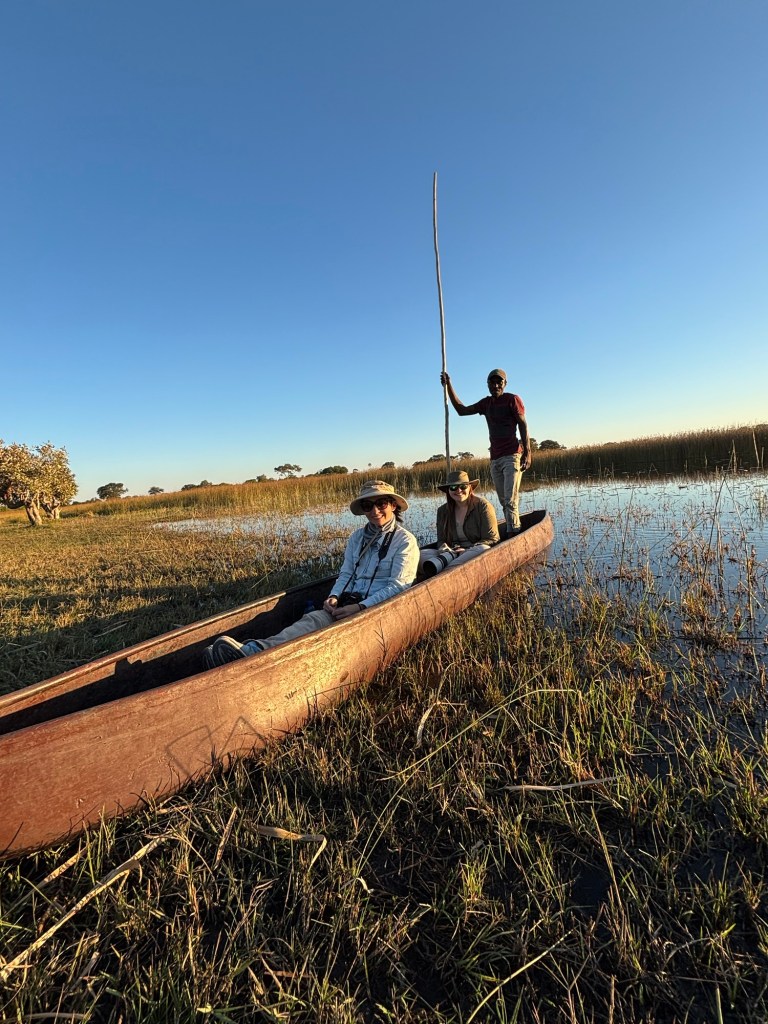
Happily, what followed was an uneventful, relaxing ride through the reed-lined water. Our guide pointed out the two types of lilies: day lilies and night lilies which, respectively, open their petals at the appropriate time of day. We saw a few birds and heard hippos but didn’t see one which is a good thing if you are on the water. Back on land, Joe set up a table for our first ‘sundowner’, a drink and a small snack (crisps and dried mango) while we watched the sun start to set.
He drove us back to the lodge, stopping briefly to watch a knotted cobra cross in front of the truck. Back in Xaoo, we were surprised to met once again by the enthusiastic welcoming committee holding hot towels and welcome drinks …. until they realised that it was us – already welcomed guests – and not the new guests they were expecting imminently. Laughing, Ma led us to the bar and fixed our drinks: a Botswana G&T for me and another welcome drink for Rhiannon.
The chef entered, mimicking a hyena’s call, and introduced dinner: onion soup with brioche rolls, beef and wedges and chocolate cake and ice cream.
The biggest shock to our system was that we felt very cold by the end of the meal. It was 9 degrees outside and, whilst that is not cold by UK Winter standards, it is when you do not have solid walls and have no heating meaning that it is 9 degree inside too. Happily, the housekeeper had been in to let down our mosquito nets, “spray” our room thoroughly (to kill any mossies or other insects already present) and had made up our beds with hot water bottles and blankets. It was very cosy and, after setting our alarms for 5 o’clock in the morning, we went to bed with the sound of grunting hippos and were asleep as soon as our heads hit our very comfortable pillows


Leave a comment