After the hilarity of the previous night, Rhiannon and I forgot to set our alarms. The elephants woke us with a start at 5:45am and we rushed around in a panic, freezing cold and flustered.
Thankfully, we had learned by now to pack our bags and get our clothes ready the night before. We only kept Onks waiting a few minutes and he escorted us to breakfast.
I went up to get a cup of tea. There was no hot chocolate for Rhiannon so she had a cup of hot milk and a bowl of cornflakes. I had a piece of toast which, I was interested to find, was both soggy and burnt. Ma from Xaoo would not have approved. The Japanese group was also at breakfast, jumping the queue in their quest for “Hot water! Hot water!” for, I jest not, their breakfast pot noodles. I was not to be elbowed out of the way, however. Nothing comes between me and my cup of tea. Rhiannon felt as though she was in a sheep pen.
We had determined that we would secure the front seat by hook or, indeed, by crook. We did so easily, hoisting ourselves up into Onks’ Land Cruiser before anyone could object and setting out our bags. Claude and Claudine clambered in behind us and Onks took the wheel.
“Water,” he said, turning to Rhiannon expectantly as she prepared to sit down.
Realising that this Onks-speak for “please could you pass me a bottle of water, Rhiannon”, she handed him a bottle from the cool box between us. It wasn’t the most encouraging of starts.
We had travelled three and a half minutes before we encountered a pack of five wild dogs on the road in front of us. We could not believe it. Just over 1,300 wild dogs in the whole of Botswana and we had seen ten of them!
“Shall we follow them?” asked Onks.
“Yes!” Rhiannon and I chorused, eager to see where they would lead and if we could possibly join another hunt.
“Les chiens,” observed Claude.
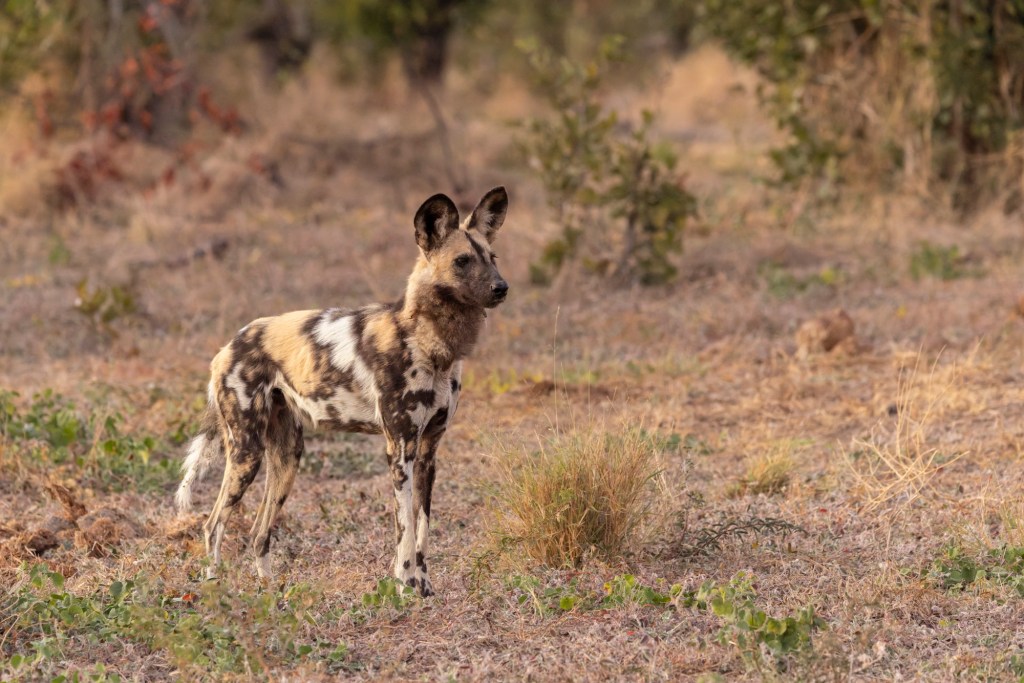
Onks turned his truck around and started to follow the dogs at a sedate pace. We went right and, almost immediately, heard the unmistakable deep-throated roar of a lion in the distance. The dogs heard it too, stopped and ran in the opposite direction. We followed them until Onks stopped, turned off his engine, and spoke on his radio. He said we could go no further because they had entered another lodge’s ’concession’ (privately managed land). He shrugged and said, “let’s see if we can find the lion.”
The first thing we noticed about Onks as a tracker was that he didn’t seem to be “a man on a mission” like Joe. He drove slowly, hardly smiled and didn’t seem to enjoy what he was doing. He reminded me of one of those teachers who doesn’t like children and yet has ended up in the profession. The trackers all have radios which they use to communicate news of sightings and significant events. After our brief encounter with the dogs, Onks spent a lot of time talking into his radio and speaking to other trackers as we passed them. All conversations were in Setswana. I wished that I had studied this in Duolingo instead of the French that was proving useless.
“Less talk, more drive,” said Rhiannon quietly to me.
Occasionally, Onks would stop and study the ground for prints. “I’m trying to read my newspaper,” he explained.
His newspaper told him that a leopard had passed by at some point in the night.
Rhiannon and I tried very hard to befriend Onks in the hope that he would deign to help us find some animals, preferably cheetahs. I asked him about the dead buffalo he had mentioned last night. He said that lions had killed it a few days ago and now the hyena, jackals and vultures had taken over. Rhiannon asked about the chances of seeing a cheetah saying that she knew there were no guarantees. Onks confirmed there was a sighting yesterday. Apparently four male cheetahs killed an impala and were preparing to tuck in when a male leopard sauntered over and took their kill away. We could not imagine the thrill of seeing that although Rhiannon did not approve of the theft.
The area was so rich in wildlife. Rhiannon and I reported to each other everything that we could see; zebras, implalas, elephants, LBRs, hornbills. Onks, in between checking his newspaper, pointed out animals and birds and answered our questions. Claude and Claudine did not need to ask questions. They were more than capable of pointing our animals, usually with a one or two minute delay, or, if in doubt, saying, “oiseau”.
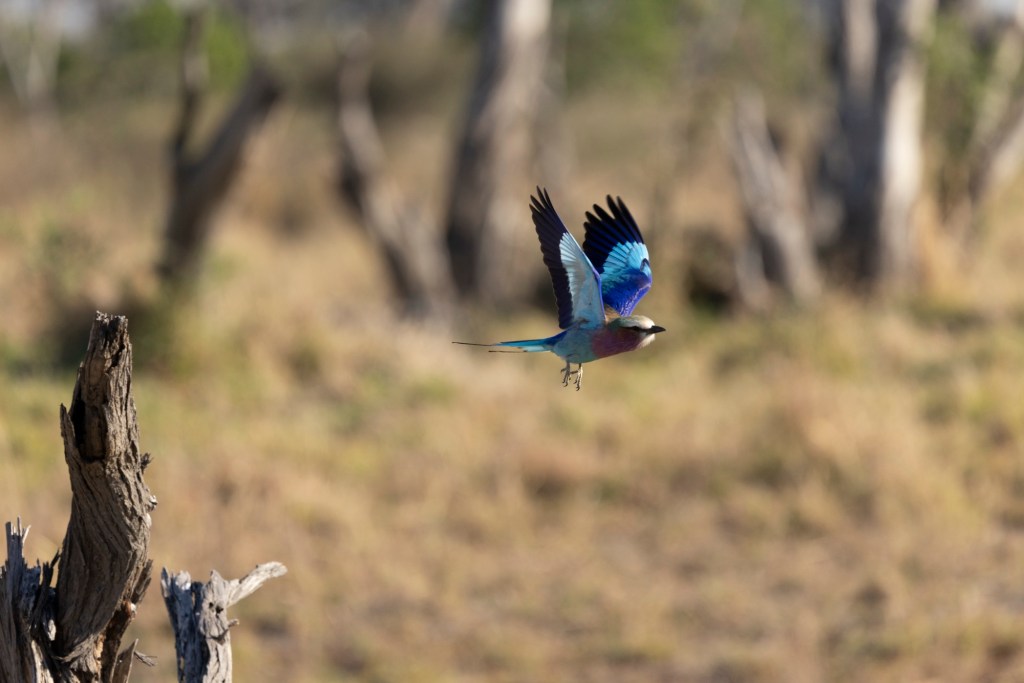
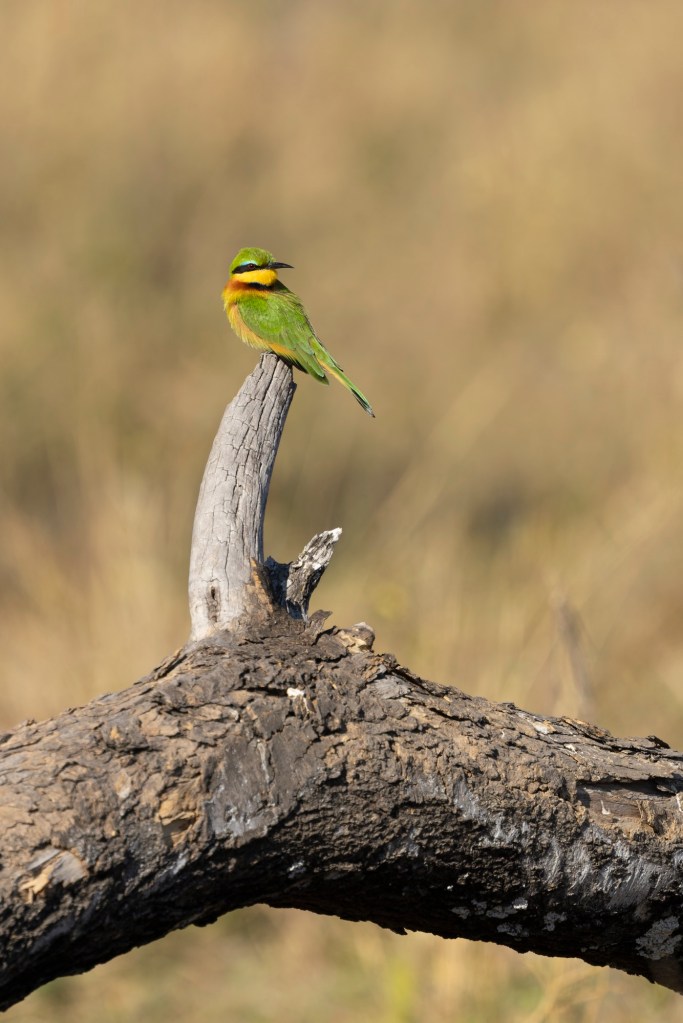
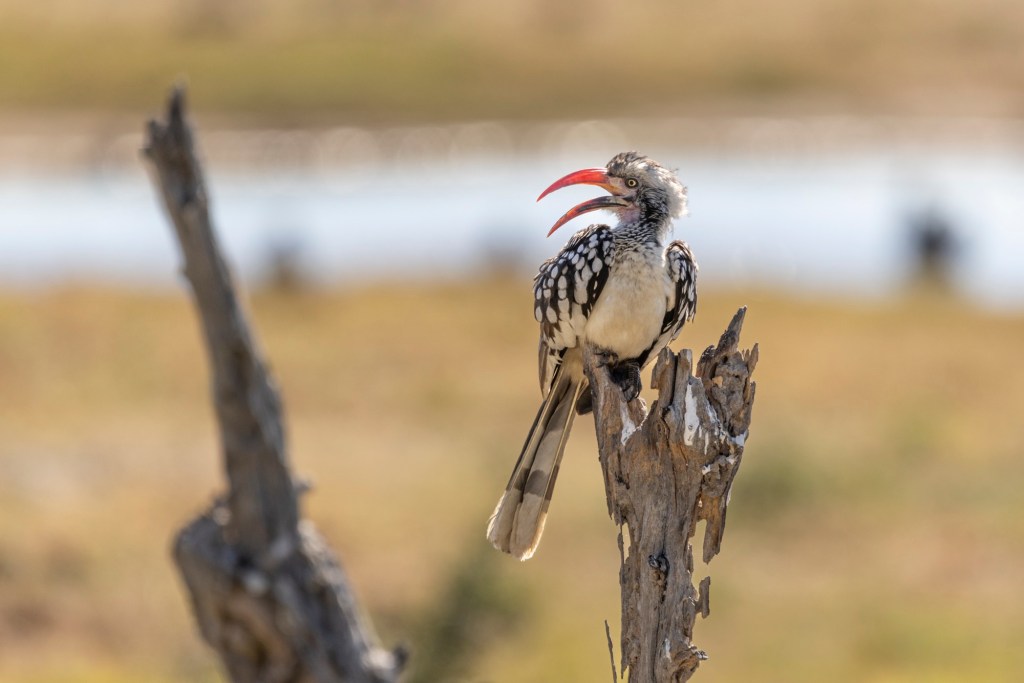
Despite seeing vast quantities of game, we were becoming hungry for more. We heard tree squirrels complaining and saw birds on top of a tree which raised our hoped until ….
“Oh no – relaxed impalas,” said Rhiannon with disappointment.
I nodded, “And no giraffes to point us in right direction.”
Had the French been able to understand us, they would probably have thought us mad.
We drove through large, open areas with longer grass and few trees.
“Would this be suitable for cheetahs?” Rhiannon asked. Onks confirmed that it would. He pointed out a few cheetah tracks and cheetah “scat” next to a tree. We felt, and hoped desperately, that we were getting close.
We had a “les toilettes” break for Claudine. Claude did not bother to go to the bushes but simply stopped next to the car and turned his back for a ‘French pee’. Claudine returned from the bushes. Onks did not provide wild wee supplies so I handed Rhiannon tissues and wipes and she gave me one of Macsen’s ‘poo bags’ that she just happened to have upon her person, for used tissues and wipes. I showed her the direction in which Claudine had gone which warranted a vehement “Well, I’m not going in the same place as her!”
When we returned to the truck, Claude was inspecting a poison apple which Rhiannon had spotted on our arrival.
Claude: “what is zis?”
Onks: “Poison apple”
Claude : “Ah! You can eat?”
Onks: “NO!”
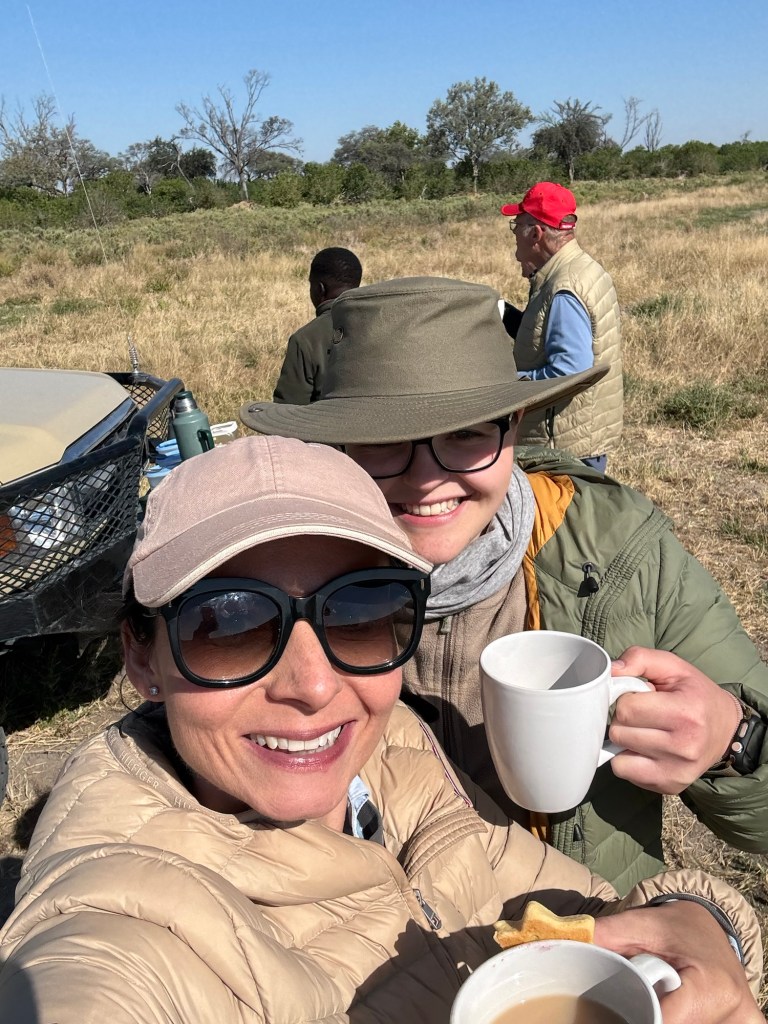
Onks asked us for help in setting up the tea and coffee. Rhiannon and I carried the cool box and large bag containing the flasks. As I sipped my lukewarm tea and Rhiannon drank her milk, we spotted a truck driven by Silva, another tracker from our lodge, containing eight of the Japanese guests. Onks and Silva had an in-depth discussion which involved quite a lot of pointing by Silva.
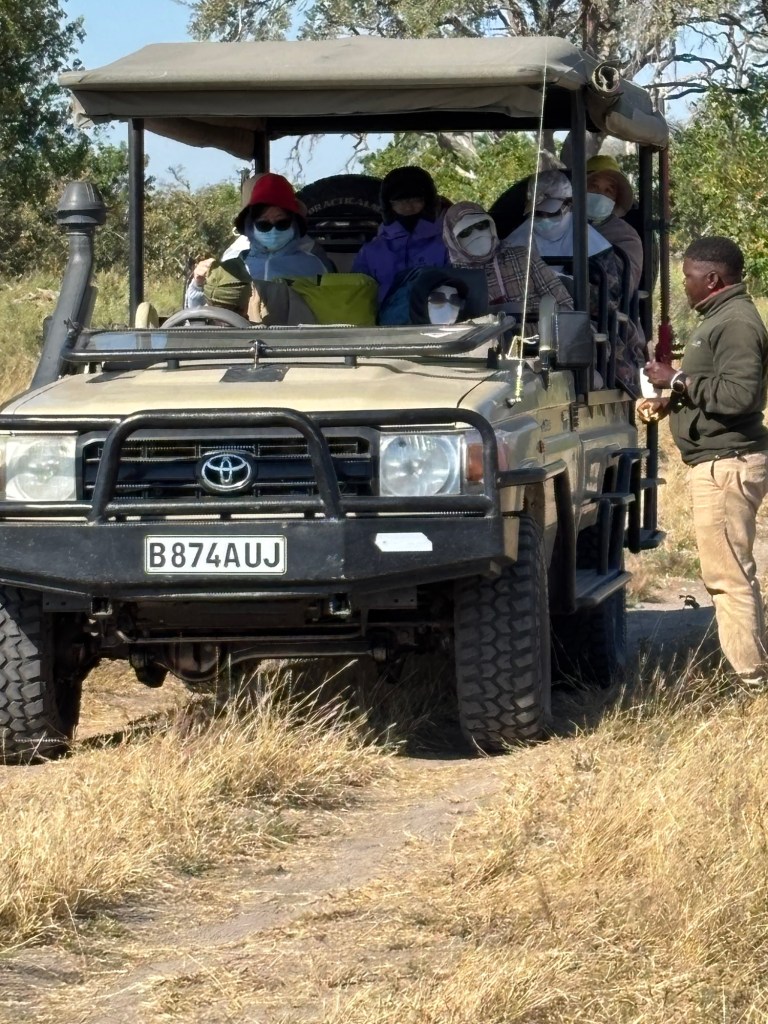
We set off and, for the first time, Onks seemed to be “on a mission”. He drove with more speed and appeared to know where he was going.
Rhiannon asked him where we were going. “It’s a surprise,” he said.
When Claude asked him, he responded, “it’s two impala fighting.”
We did not see any giraffes staring, stressed impalas nor doves in trees but we did see a truck stopped ahead with all passengers aiming their cameras at the bushes. That is another sign to look out for: people taking photos with urgency.
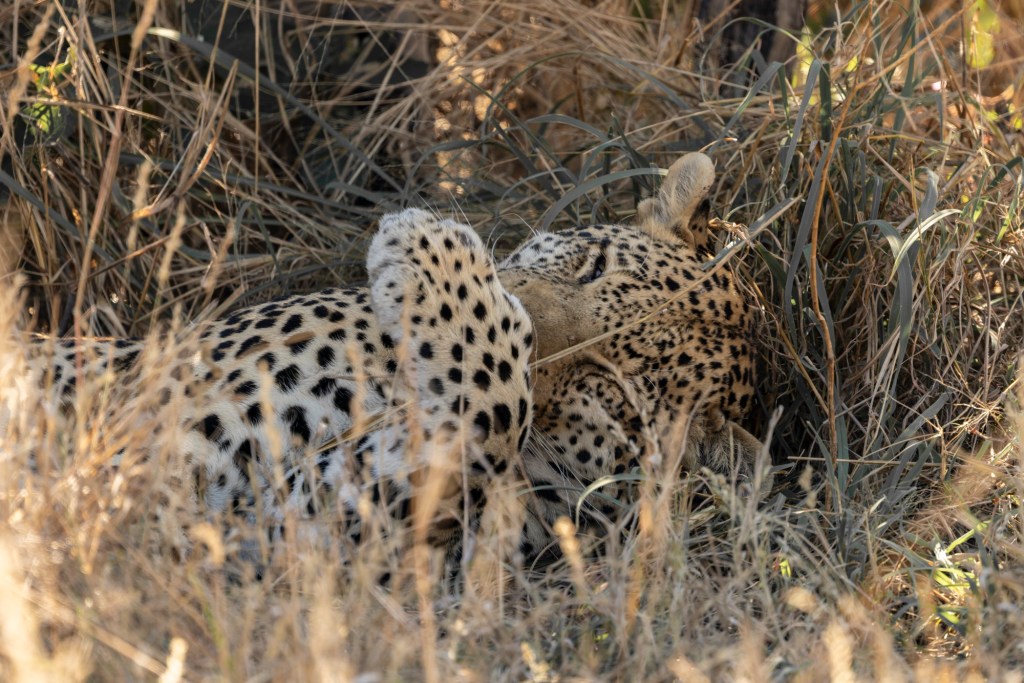
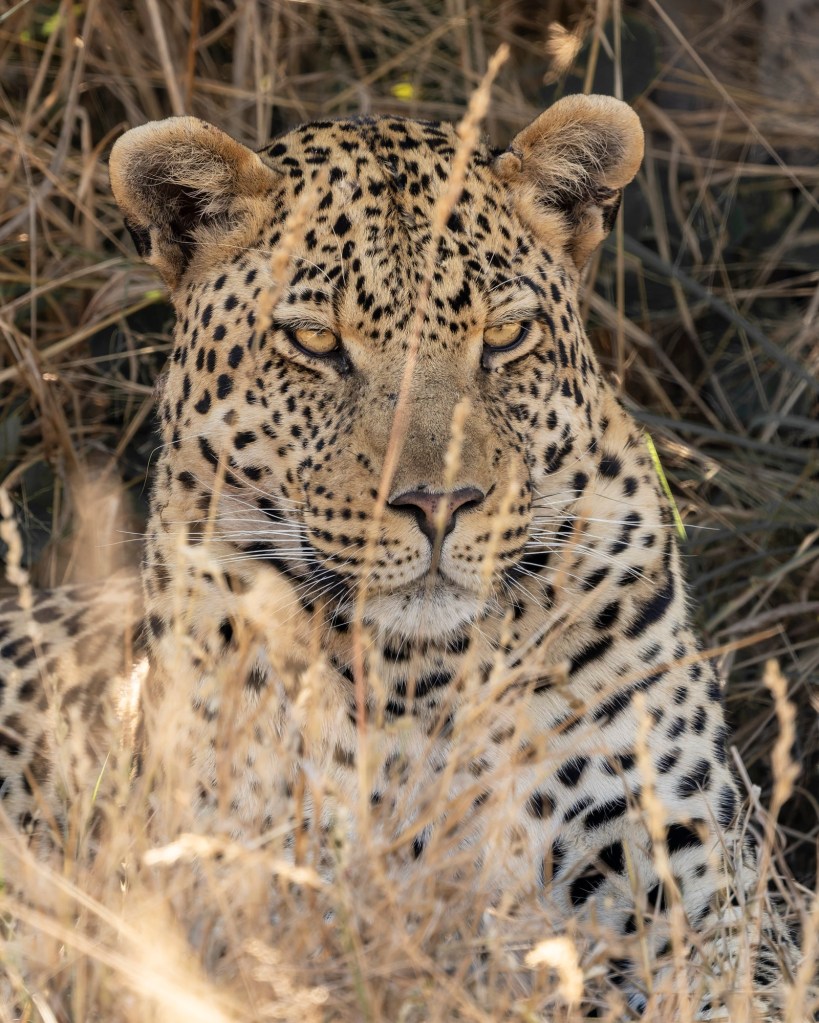
Underneath the bushes in front of us lay a large leopard, stretched out and fast asleep. It was the most beautiful example of two impalas fighting that I had ever seen. Rhiannon set to work, her camera purring as softly as a leopard.
Onks spoke with the other driver and, as their truck moved away, one of the (American) passengers stated, “Cool! Let’s go find the cheetahs next!”
We moved closer to the leopard who stirred and sat up, looked around, then fell back asleep.
After almost ten minutes, Claude asked, “Onks, this cheetah or leopard?”
Onks confirming it was a leopard and not just any leopard but the very one who stole the impala from the clutches of the cheetahs. “See, he has a very full belly?” said Onks.
We did see and Rhiannon was very cross with the leopard for stealing from the poor, hungry cheetahs.
After leaving the leopard, Onks had but one thing on his mind: lunch. We wanted to continue to Moremi and try to track the cheetahs but Onks, we were beginning to realise, was a man whose day is dictated by his mealtimes. Still, it is hard to complain when you share your lunch spot with zebras, impalas and an African fish eagle. Rhiannon asked Onks to help identify a passing bird and, together, they pored over his well-thumbed bird book.
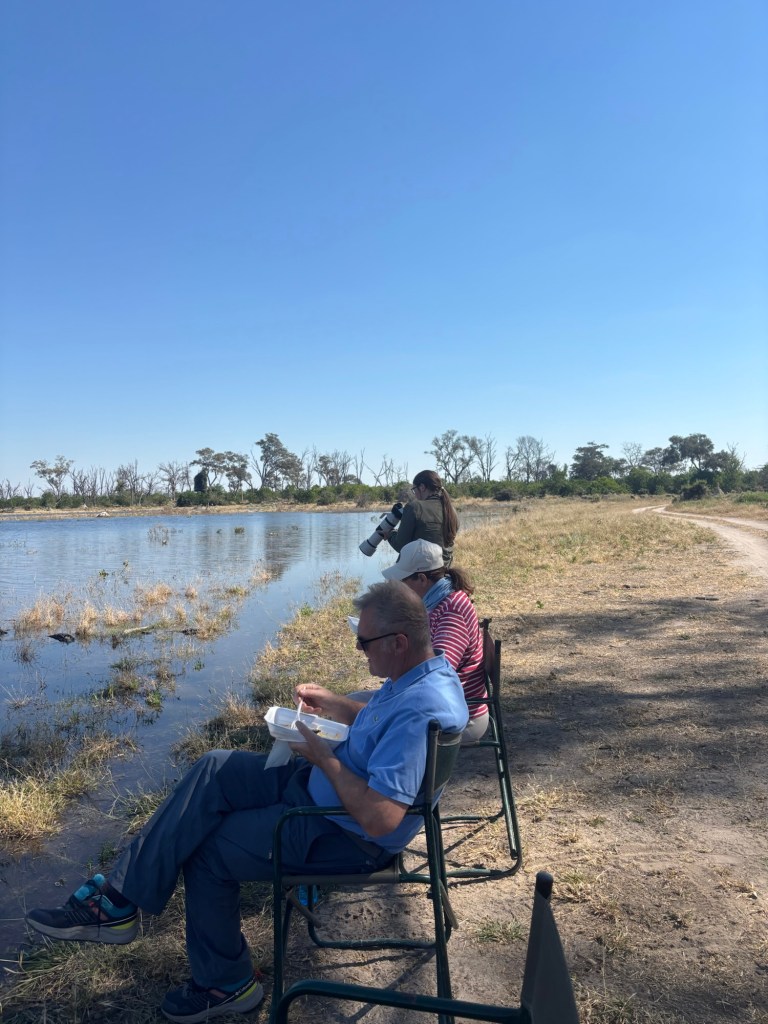
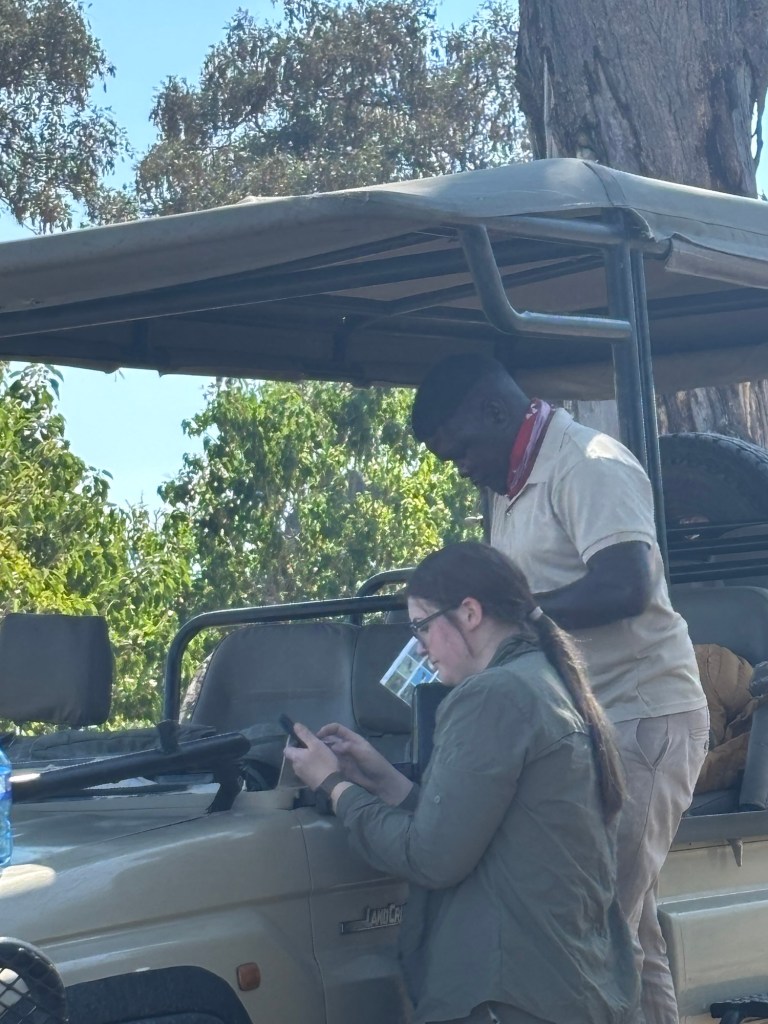
We knew that the period after lunch, in the heat of the day, is not the best time to see the animals who, understandably, seek the shade. Still, we saw some lovely elephant interactions. Three minutes after we stopped to film them, Claudine observed, “elephantes!” It is possible that she had been asleep.
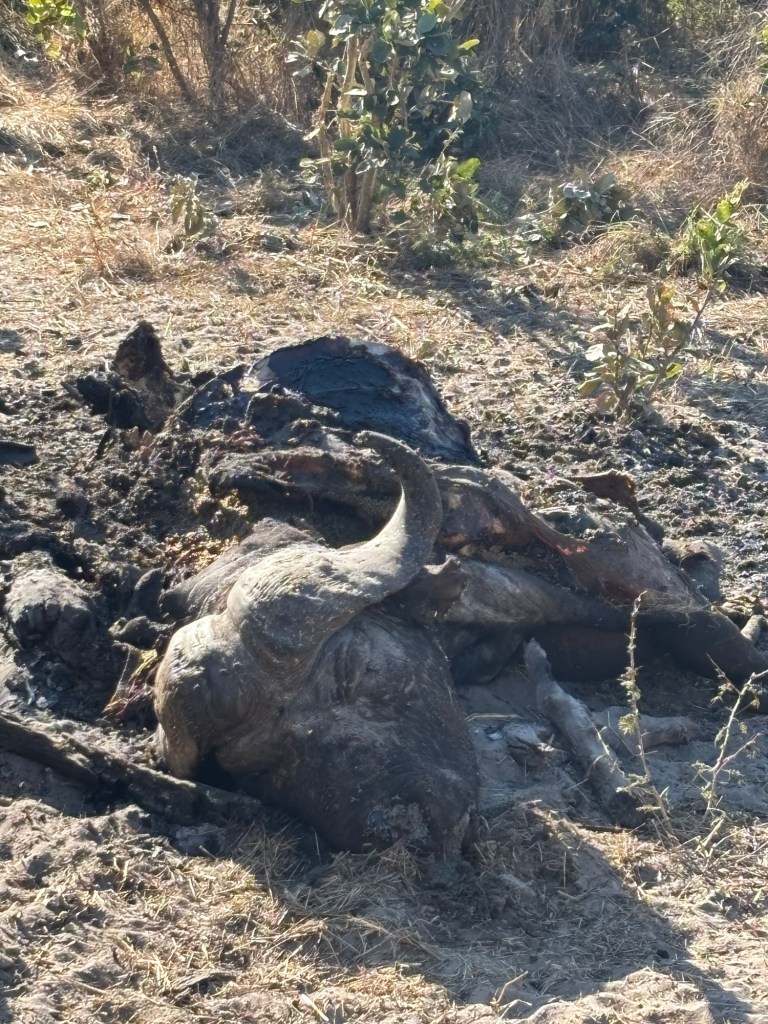
After this, we ambled around. Rhiannon noticed that Onks had switched off his radio and the fastest he drove was 12.5 mph. Mark Drakeford would have approved. Rhiannon and I continued to look around us with increasing urgency but to no avail. After trundling back towards the lodge in silence, I asked a question which, as I spoke the words, I could not believe they were mine. In desperation to delay our return to the camp, I leaned forward and asked, “Onks, please may we go and see the dead buffalo?”
As we approached, the smell of decay pervaded the air. Onks stopped to try and determine which way the wind was blowing. With Rhiannon’s assistance, we drove upwind and, shortly after, beheld the decomposing, maggot-ridden corpse of a buffalo. That I had requested this would prove a low point in my life.
Onks had one final surprise in store. He had told us earlier that when an elephant dies, the family visits the site every day for five minutes and stands in silence, mourning their dead. Gradually, they take the bones and place them elsewhere.
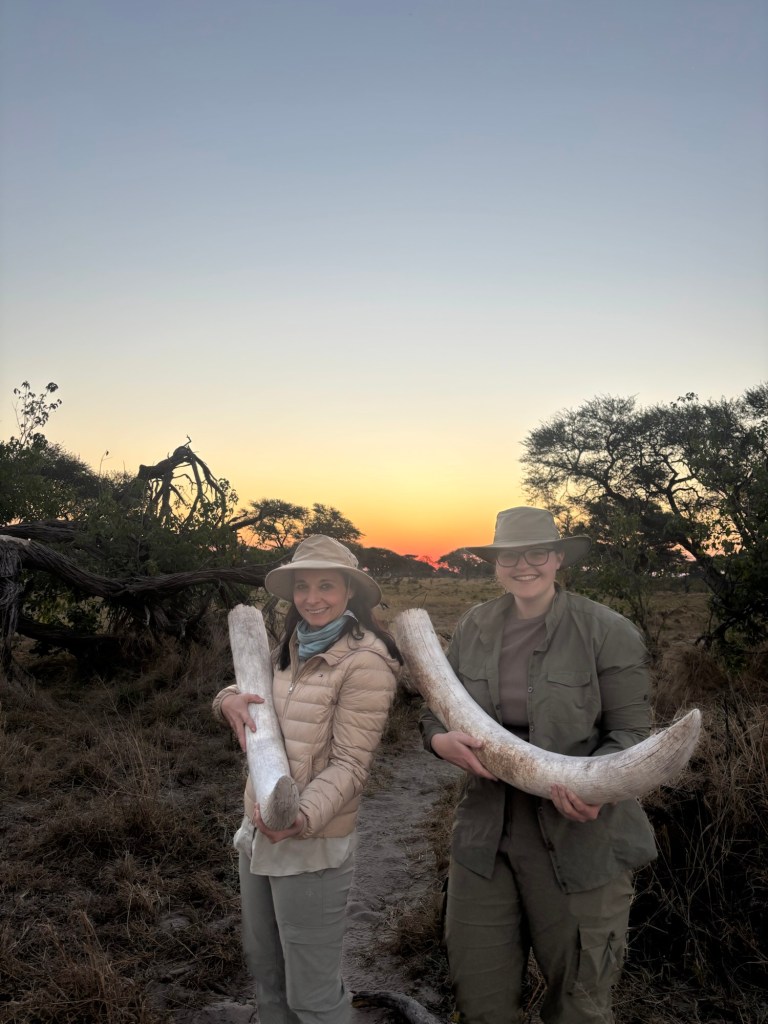
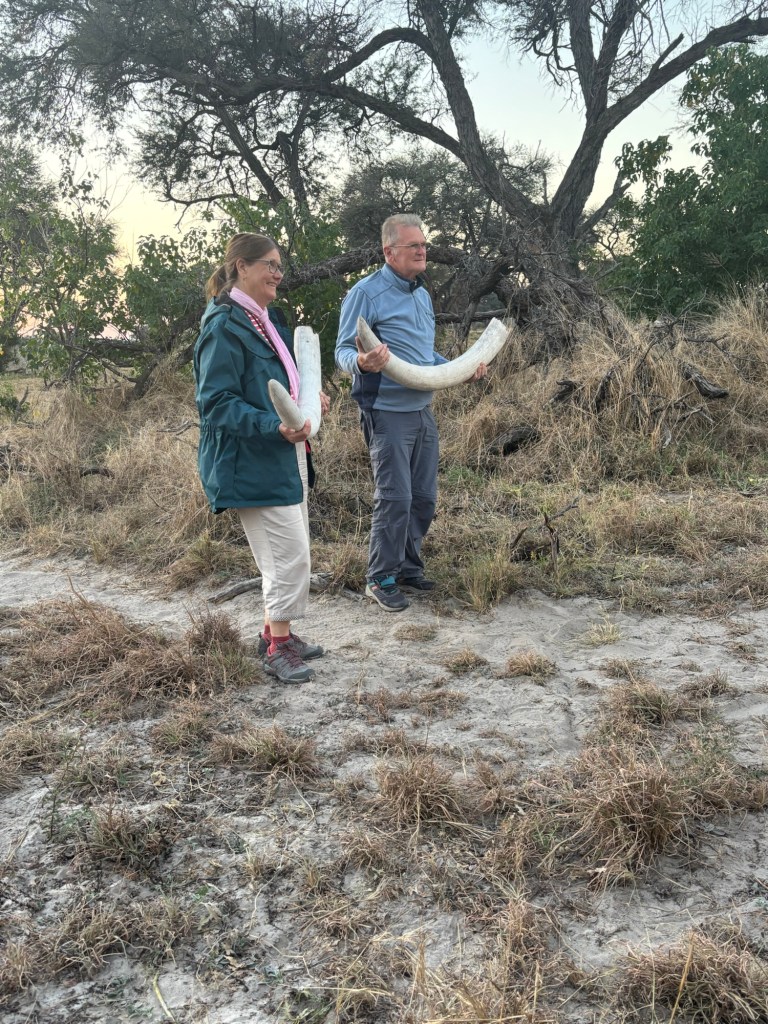
Passing a herd of elephants, Onks asked Rhiannon and me if we would like to hold an elephant’s tusk. We weren’t really sure how to answer that question but, thinking it was one of his jokes that I didn’t understand, I said “you stop by an elephant and I’ll go and get its tusk for you.”
“Right!” said Onks and drove off marginally faster.
I turned to Rhiannon in confusion and mouthed, “what’s happening?”
All would become clear when Onks took us to the site of an elephant’s bones and directed us to vacate the truck. Turning first to Rhiannon, he invited her to pick up a tusk. What then proceeded was a bizarre ‘sundowner’ whereby, instead of partaking of a drink, we took it in turns to pick up the (very heavy) tusks as the sun set. Onks then arranged group shots. The French couple, who had been blasé about the wildlife and the birds, absolutely loved it. Claude had three turns. Personally, I’d have preferred a G&T.


Leave a comment